


Texas Redfish Fly Fishing
Few saltwater fisheries can truly offer year-round fishing opportunities. Weather and fish behavior are the major factors that affect success on a trip to the flats. Fly fishing for Texas redfish means that no matter what season, regardless of conditions, there are always feeding fish accessible to fly anglers. This is what makes the Gulf Coast of Texas stand out as a premier fly fishing destination, and one that all fly anglers need to put on their bucket list.
What makes Texas redfish fly fishing so special? The answer is easy: versatility. Our coastline is enormous. The bays and flats we fish are the rearing grounds for young redfish as they eat their way to adulthood. Redfish in Texas can be patterned depending on the seasons and weather conditions, and they are always around.
Below, we’ll talk about what you can expect on your trip to the Texas flats and why our fishery has become world-renowned, attracting fly fishermen of all skill levels worldwide.
Texas Redfish
Behavior
Redfish prefer shallow water where they feed on crabs, shrimp, and different types of baitfish. This makes them the perfect game fish for fly anglers. Everything about Texas redfish fly fishing is visual. The sand and turtle grass flats of the Gulf Coast are thriving with the food that redfish love to eat.
Texas redfish often travel in packs, working as a team to flush food from their hiding spots. This results in aggressive feeding that can be seen from long distances. They can also be found sliding silently in singles or doubles on sand flats in shin-deep water, creating a challenging yet rewarding situation for an angler. You can watch redfish react to the movements of your flies as they hunt them down before inhaling your offering in a gill-flaring eat.
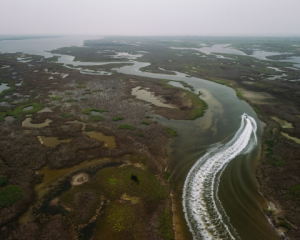
The Gulf Coast of Texas is wrinkled with channels that spread out like fingers onto various types of flats. Redfish will use these channels as cover as they move from flat to flat. Once they find an area where they feel safe, they move up shallow and become predatory. Anything that is moving in front of them is considered food. They will be seen pushing water as they hunt or tailing as they dig for a morsel that has buried itself.
Habitat
The seemingly endless coastline is what makes Texas redfish fly fishing so unique. Not only does it provide safety and feeding opportunities, but it can sustain huge amounts of shrimp and crab life. The huge food source available to Texas redfish is the reason for the healthy numbers of fish we see in Texas. Broad flats covered in different types of turtle grass create the perfect hiding spots for food sources for redfish. These flats often have hidden contours and depressions that are often difficult to see but perfect for prey hiding from ambushing redfish.
Everything moves with the tides and wind. Water gets pushed into shallow lakes and marshes as the conditions fluctuate. This gives cabs and shrimp chances to escape the hungry mouths that follow them while also stirring up nutrients that they rely on to survive. Deep channels and gutters help move water in and out of backwater bays.
Texas has a pristine and vast coastal landscape, creating the perfect conditions to sustain large bird migrations attracting bird watchers and waterfowl hunters. The Texas coast is an important area for migrating birds throughout the seasons.

Best Times For Texas Redfish Fly Fishing
Summer
Summer brings the most consistent redfish activity along the Texas coast. Warm water makes redfish aggressive and readily available. Sunny days with high sun makes it easy to spot redfish at long distances, allowing for many opportunities for amazing sightfishing.
Fall
As summer fades in most parts of the country, Fall on the Texas coast is mild meaning fishing remains excellent. Warm water temperatures keep redfish activity high and they continue to feed heavily in many of the same places they are found throughout the summer. Storms are possible but don’t think this changes redfish behavior much. Cloud cover may make spotting cruisers more difficult but redfish push water and tail readily allowing for great sightfishing opportunities.
Winter
Mild winters means Texas redfish fly fishing is still extremely productive. Redfish activity certainly changes with cooler water temperatures and they tend be come more concentrated. It may be more difficult to find fish. But when you do, there is usually good numbers of them. Daytime temperatures can still reach the 80’s, even in February, so efforts become more focused later in the day once shallow waters have a chance to warm up.
Spring
As days get longer and temperatures begin to rise, redfish will begin to spread out. Wind and clouds can make seeing fish and casting more difficult, but encounters tend to increase throughout the spring. Watch for wakes and tails on your favorite flats. Redfish begin to disperse onto the flats as they feed more heavily and their activity increases.

Factors Affecting Redfish Behavior
Because the waters of the Texas Coast are quite shallow, temperature fluctuations will affect redfish behavior the most. However, this doesn’t mean they stop feeding. When cold weather moves through, focus your efforts on water close to channels and gutters. Redfish will come up onto flats when water temps rise later in the day, offering plenty of shots at happy fish.
Wind and clouds may make spotting fish difficult and casting more difficult. Wind blowing against shorelines with the tide may make water cloudy. Redfish become reckless in these conditions and can begin to feed heavily. These can sometimes be the best days to be on the water as fish are bold and rarely spooky. Look for surface activity and fish crawling inches of water along shorelines. If you can get a fly in front of them, they will eat it.
Techniques For Texas Redfish Fly Fishing
Redfish Flies
With hundreds of fly patterns available, it can be hard to know what to use when. Redfish are opportunistic so think less about what your fly is imitating and more about its functionality. It is more important to match the fly with water conditions and depth.
In clear water conditions, think small and lightweight. Redfish may be more spooky and require a delicate presentation. It may be harder to get a fly into a fish’s line of sight because they will be hyper-aware. You can sneak a weightless fly or one with beadchain eyes in front of a redfish in clear and calm conditions much easier.
In dirty water, think the opposite. Bigger, darker profiles with slightly more weight will help a fly get down into a redfish’s zone much more effectively. They may sense a fly dropping into the water near them which may trigger a predatory response rather than spook it.
For more details on specific flies, check out a previous blog posting HERE

Casting
Accuracy is always important in saltwater fly fishing but most shots at redfish tend to be close. If the water is murky, it is not uncommon to have redfish sneak up within a leaders length of the boat without being noticed. Be ready for an extremely quick and short cast, or a long accurate cast simultaneously. A fish can appear anywhere, anytime on a productive flat. Stay focused and ready at all times. Sometimes you have just a few seconds to get a cast off so always be prepared.
Reading Water
One of the biggest hurdles to beginners in Texas redfish fly fishing is finding the zones where redfish spend their time. Because the Texas coast is so big, much of it may be hard to figure out where the productive areas are.
On a new piece of water, look for what we call transition areas. These are places where traveling redfish may become concentrated and easier to spot. Any type of feature on a flat like an island or a hump may be a good place to sit and watch for a while. Prominent, shallow points will concentrate fish into one spot as they swim around it. Any place where the depth changes on a flat can also be productive where redfish may come out of deeper water to come onto a flat. Look for hard edges or gaps in turtle grass flats. Redfish moving from one spot to the other will be much easier to see on the light-colored sand as they leave the dark bottom of the turtle grass.
When fishing a new part of the Texas coast or heading there for your first time, consider booking a guide. Guides are on the water every day and have spent many years exploring the habits of redfish and where they like to be.
Challenges and Tips for Texas Redfish Fly Fishing
Common Challenges
Spotting redfish can be one of the most challenging aspects of Texas redfish fly fishing. Without a seasoned guide, it can be almost impossible for beginners. Quality sunglasses are an absolute must. Sunglass brands today have done incredibly well at developing new polarize technologies meant for seeing into the water in every type of condition. Without polarized glasses, you don’t stand a chance at seeing fish.
If fish aren’t pushing water or tailing, watch for movement. Redfish can blend in extremely well with their surroundings. Any type of movement your eye catches will most likely be a fish, so watch the area carefully. Also look for shadows when the sun is out. If a fish is not entirely on the bottom, dark shadows will appear and will be much easier to spot.
Focus on looking for out of place shapes rather than looking for a fish. Because of challenging light conditions or refraction, seeing a fish perfectly in the water is extremely difficult. Focus on looking for outlines and fish shapes.
Generally, the first fish you spot of the day will be the most difficult. Once you see a fish or two, your brain will begin to see the bottom of the flat differently. Seeing the subtleties of a fish hugging a dark bottom will become more instinctual and will become easier as the day progresses.
Tips for Success
Breaking down a new redfish flat can be intimidating, even for an experienced redfish angler. Don’t be afraid to move! Spend some time searching areas where spotting a fish might be easier: contours, depressions, transitions between turtle grass and sand, or islands. If nothing happens for fifteen or twenty minutes, go to the next one! Don’t waste the best parts of the day on unproductive areas.
Moving water gathers food, and the fish know this. Winds or tides can create currents that can collect redfish food. Check out windward shorelines for feeding activity as shrimp or bait may have gotten blown into that bank. Gutters and channels that drain backwater marshes will likely have fish picking off shrimp or bait that are being flushed out.
Don’t be afraid of bad weather. Cloudy days and murky water can bring a sense of security to redfish patrolling shallow water. They can become bold. They may not be that easy to spot, but redfish will often come up into water so shallow that their backs will be visible. Tie on a big, dark fly and don’t be scared of casting it close to a fish. It’s better to spook them with a close cast than it is to land your fly too far and not giving the fish a chance to see it.
Consider Hiring a Guide
Any type of saltwater fly fishing comes with a steep learning curve. Hiring a guide is the best way to learn from a professional how to better understand an area. Don’t just focus on the spots a guide is taking you to and think you can show up the next day and have the same results. What worked one day rarely works the next.
Guides know how fish move throughout an area depending on the season and water conditions. By asking good questions about their process and approach to the water, you can begin to understand the different aspects of an area that will make you successful on your own.
If you can, try to book a guide during different parts of the season, not just prime time. Because fly fishing for Texas redfish can be done year-round, seeing how the fish behave in one part of the coast behave through an entire year will help give you a better understanding of the area as a whole. Book your fly fishing guide with Bay Flats HERE.
Conclusion: Be Curious
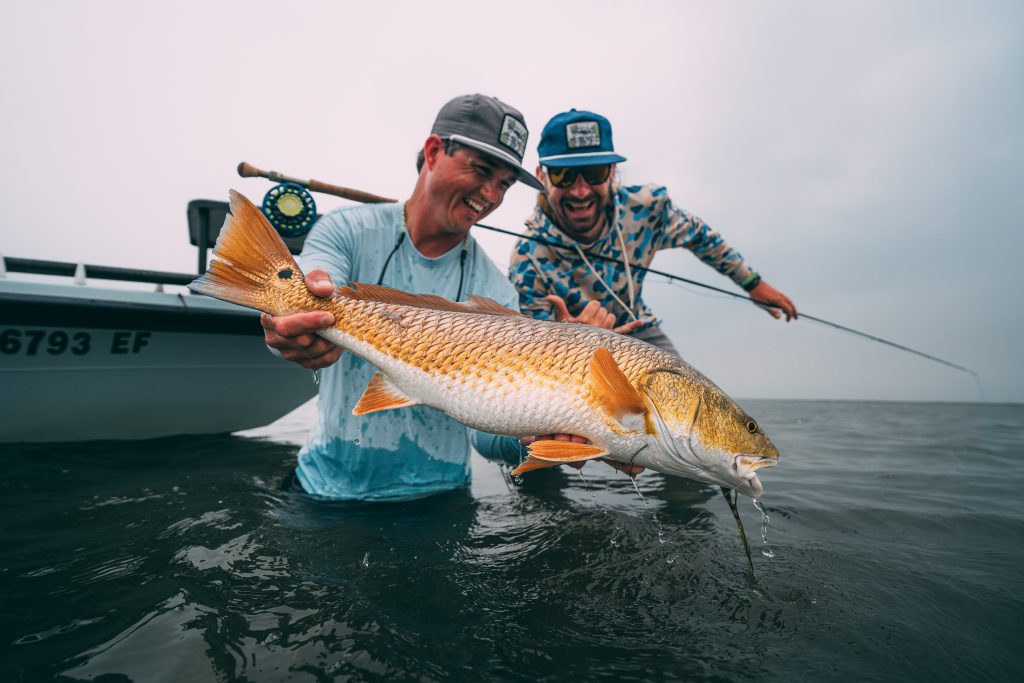
One thing that will help you become better at Texas redfish fly fishing is always being curious. There are so many things to explore and understand on the Texas redfish flats. Each season throughout the year has something to teach about redfish behavior. By understanding their movements in the winter, you may better understand how they act in the spring.
By stepping onto redfish flats with an open mind and ready to try something new, you might discover brand new places and ways to catch redfish that you’ve never known before. Learning a fishery by facing the challenges and uncovering the subtleties of a fishery are one of the most rewarding aspects of fly fishing in Texas.